
Buying Guides
Eco-Friendly Promotional Products: A Material Buyer's Guide
How to choose eco-friendly promotional products from China — materials by category, certifications per claim, branding that supports the story, and honest cost.
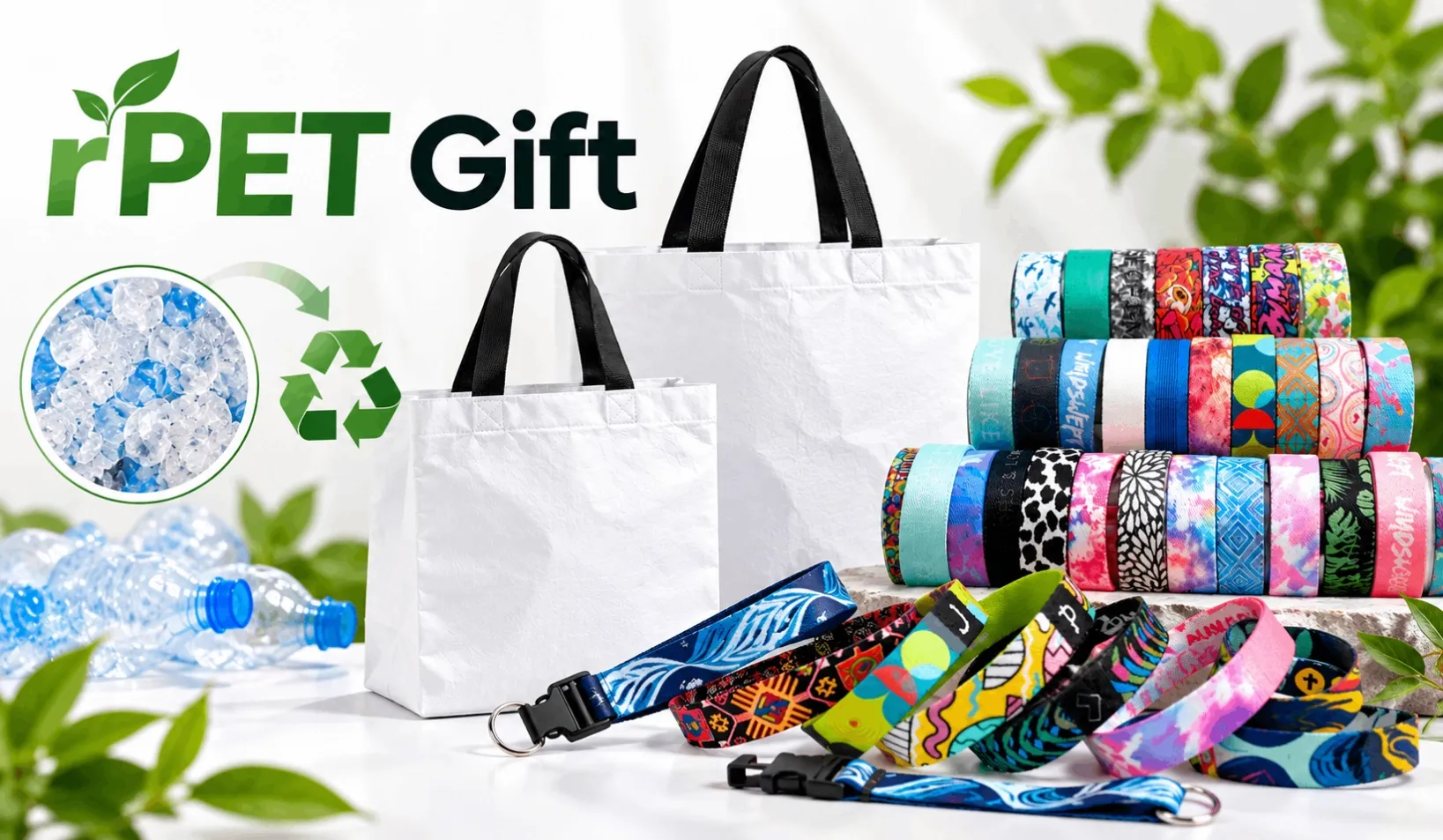
Eco-friendly promotional products are the product-level question inside a sustainable gifting program: given a category — a bag, a bottle, a pen, a notebook — which material actually performs, actually certifies, and actually costs what the quote says? Most "green product" lists answer with pictures; this guide answers with the material comparison buyers need before writing the brief.
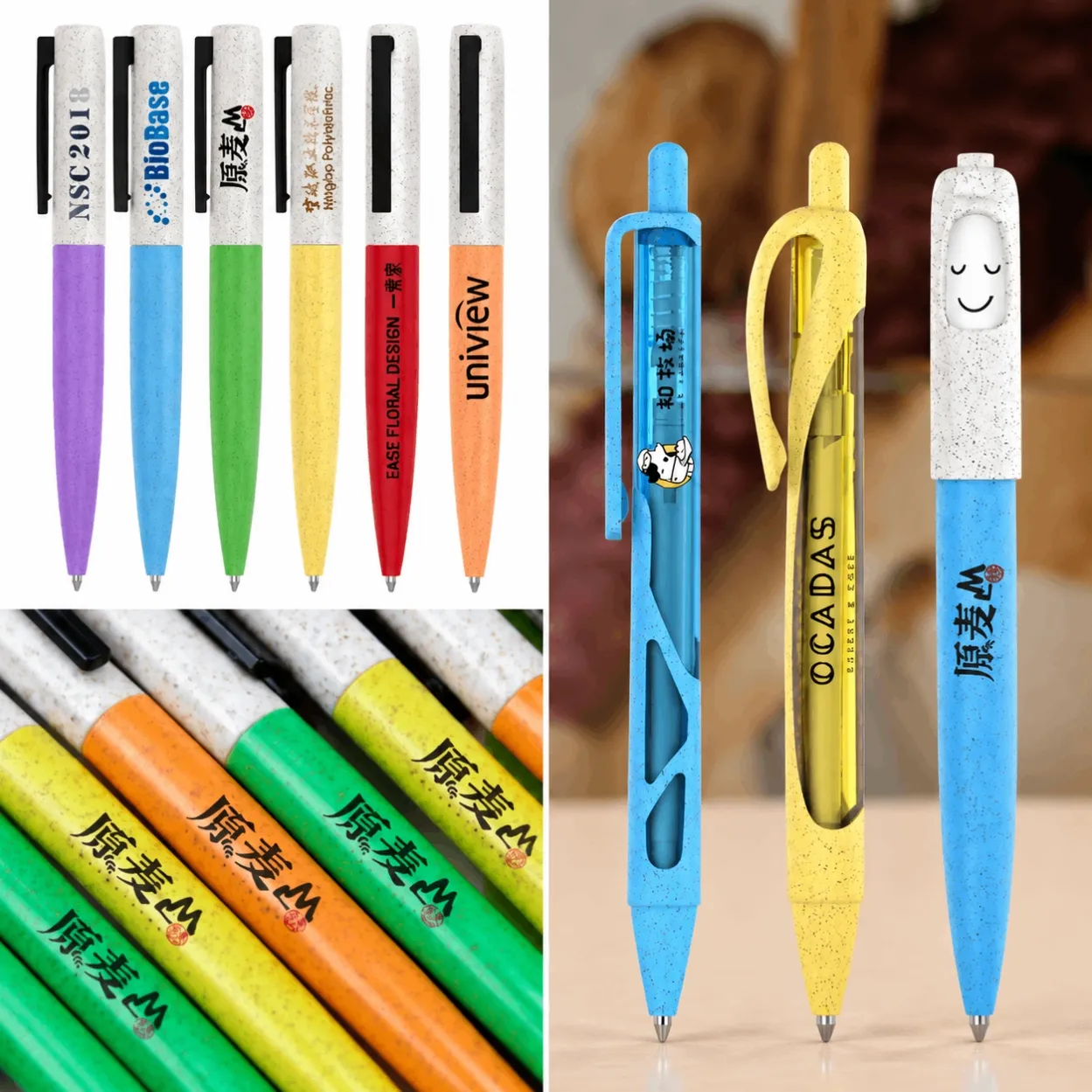
Agricultural by-products like wheat straw fit low-cost items such as pens — provided the blend percentage is stated in writing.
The short answer: match the material to the product's job — recycled and renewable materials win in different categories, and the certified version of a material is the only version with a documentable claim. Recycled PET is the workhorse for drinkware and textiles, recycled and organic cotton dominate bags, FSC paper owns notebooks, and agricultural by-products (wheat straw) fit low-cost pens. Choose by performance first, certification second, and price third.
How Should You Compare Materials for Promotional Products?
Material selection for promotional products balances four factors, and the balance point differs by category:
Factor | What It Means | Where It Decides |
|---|---|---|
Performance | Durability, feel, printability, color consistency | Apparel and bags — a fragile "eco" fabric that pills in a month fails regardless of its certificate |
Certification | Documented content or production standard | Anything you will describe as recycled, organic or FSC in marketing |
Supply reliability | Whether the material reorders consistently at your volume | Rolling programs — a certified material with erratic supply breaks a swag program |
Cost premium | Material + certification administration over conventional | High-volume categories — bags and pens at 5,000 units make a 10% premium visible |
The comparison that matters is per use, not per unit: the material performance column includes how long the item lasts, which is why the material table below leads with application fit rather than raw eco-credentials. Our sustainable corporate gifts guide covers the certification framework in full; this guide covers the materials themselves.
Which Material Fits Which Product Category?
The working matrix — each material mapped to the categories where it earns its place:
Material | Certificate | Best Categories | Performance Notes | Cost vs Conventional |
|---|---|---|---|---|
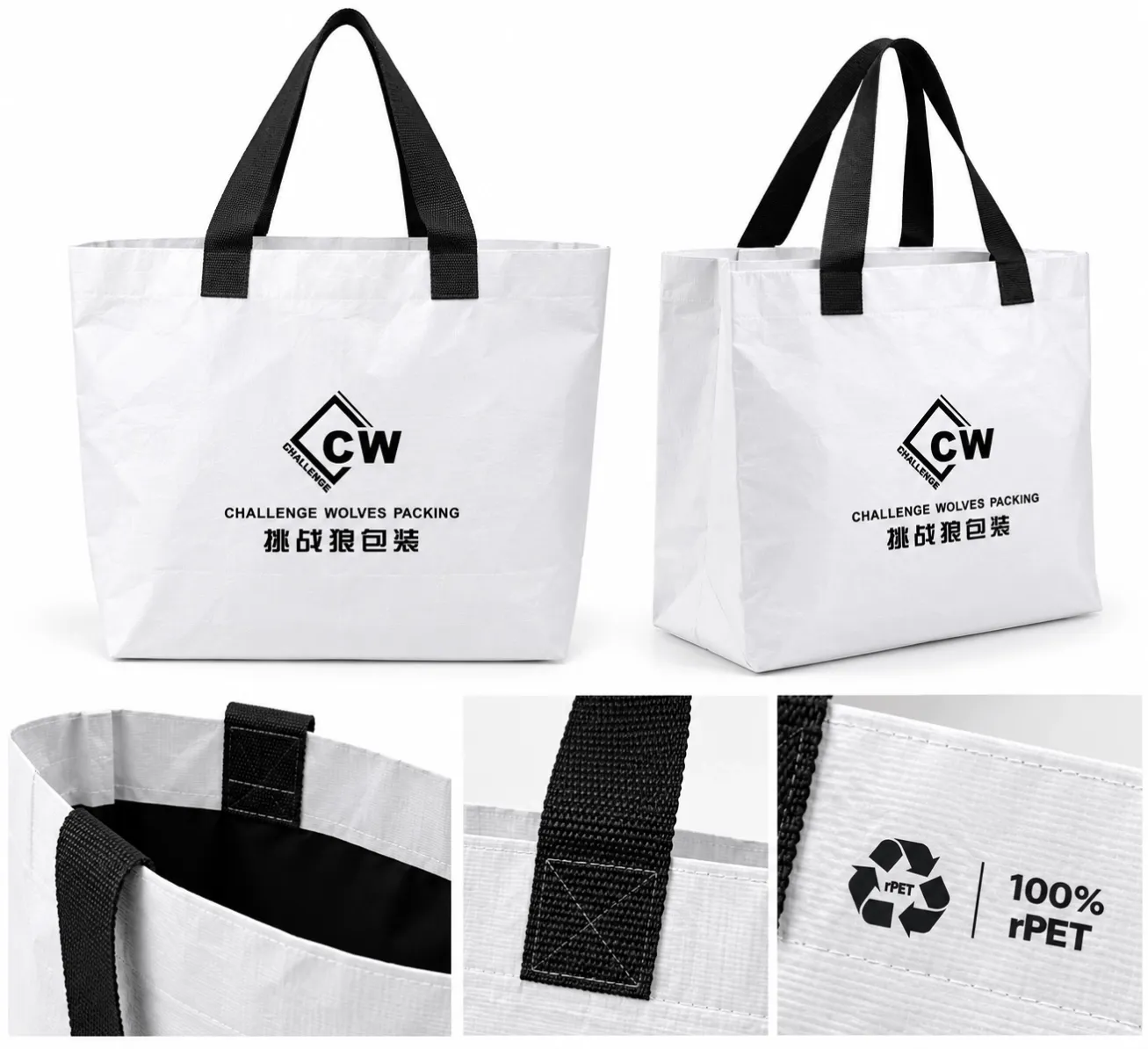
rPET (recycled PET) | GRS | Drinkware, thermal bags, lanyards, cable pouches | Near-identical to virgin PET in performance; prints cleanly; food-contact grades available | Low premium; best volume economics of the recycled plastics |
Recycled cotton | GRS | Tote bags, pouches, aprons, apparel | Soft, strong, popular in North America and Europe; color consistency varies by batch — approve a sample per run | Moderate premium; the default "green bag" material |
GOTS organic cotton | GOTS | Premium bags, apparel | Best-in-class claim for cotton; strong consumer recognition | Higher premium; worth it where the organic story matters |
FSC-certified paper | FSC | Notebooks, packaging, gift boxes, sticky notes | Standard paper performance; chain-of-custody documentation required from the paper mill | Low-to-moderate premium; the notebook default |
Bamboo (wood) | FSC where certified | Desk items, phone stands, utensils, cutting boards | Hard, durable, distinctive grain; heat and moisture sensitivity in some forms | Moderate; strongest where the look is part of the value |
Wheat straw (by-product) | Supplier declaration of blend % | Pens, small desk items, cups (blended with PP) | Requires the actual percentage to be meaningful; usually 30–50% straw content | Low premium — but demand the percentage in writing |
Cork | Origin documentation | Desk mats, coasters, notebook covers, luggage tags | Renewable (bark regenerates), durable, naturally water-resistant; limited formats | Moderate; distinctive enough to justify in premium sets |
Stainless steel (no eco-label) | None needed | Drinkware — the workhorse | Decades of recyclability and years of use; the strongest durability story in the catalog | Same as conventional — sustainability is in the lifetime |
Material fit first: recycled cotton bags, FSC notebooks and rPET drinkware cover most of a sustainable catalog's volume.
What About "Eco" Materials You Should Treat Carefully?
Three materials that appear in promotional catalogs but carry weak or complicated claims:
- Bamboo fiber textiles. "Bamboo" apparel and bags are usually viscose made from bamboo pulp through a chemically intensive process — the renewable-plant story does not carry over to the finished fiber. If a textile claims bamboo, ask for GOTS or OEKO-TEX certification and treat "bamboo" as a marketing word, not a material claim.
- PLA and other bioplastics. Compostability depends entirely on conditions — most PLA needs industrial composting, which few municipalities offer. The certificate to require is OK Compost (and for home compostability, the specific home-compost certification), not the word "biodegradable."
- Recycled blends without a percentage. "Contains recycled material" can mean 5%. For any recycled-content claim, require the actual percentage and a GRS certificate covering it.
Which Certifications Do You Ask For (by Category)?
Certifications are matched to categories, not to the program as a whole. A quick reference for briefs:
Category | Primary Certification | Optional / Supporting |
|---|---|---|
Drinkware (rPET) | GRS (recycled content) | Food-contact material declaration; FDA/LFGB statement for the market |
Bags (recycled cotton) | GRS | OEKO-TEX for skin-contact surfaces |
Bags (organic cotton) | GOTS | OEKO-TEX |
Notebooks / paper | FSC chain-of-custody | Recycled-content declaration for recycled paper grades |
Apparel | GOTS (organic) or GRS (recycled) | OEKO-TEX 100 |
Compostables (PLA, wheat straw cups) | OK Compost / DIN CERTCO | Blend percentage declaration |
Factory-level (all categories) | ISO 14001, BSCI/Sedex SMETA | Product-specific test reports |
The brief-writing rule from this table: name the certificate per item, request the certificate number with the quote, and treat "supplier has many certifications" as no information at all. The framework for evaluating those certificates — and the greenwashing patterns to watch — is covered in our sustainable corporate gifts guide.
How Do Sustainable Products Print and Brand?
Branding method matters to the sustainability claim because it affects durability and end-of-life:
- Laser engraving suits bamboo, wood and stainless: no ink, permanent mark, no added chemistry. Our laser vs screen printing comparison covers the trade-offs.
- Printing on recycled cotton and rPET uses water-based or plastisol inks — ask for water-based where available; it supports the claim and avoids the print cracking that afflicts cheaper inks on recycled fabric.
- Packaging should be branded on paper, not on plastic. Recycled paper labels and directly printed boxes beat labels on poly bags — which is also where print tolerances are easiest to hit. Our logo printing methods guide covers the techniques per material.
- Multi-material items undermine recyclability. A recycled-cotton bag with a PVC window, or a bamboo item laminated to plastic, cannot re-enter a material stream cleanly. Where end-of-life matters to the claim, choose mono-material constructions.
How Should You Cost a Sustainable Product Line?
Cost analysis for sustainable promotional products runs on three lines that conventional quotes don't show:
- Certification administration. Chain-of-custody documentation (for GRS and FSC claims) requires the factory to maintain records through production. This cost appears in the unit price, not on any line item — which is why certified versions cost more than the raw material difference explains.
- Material premium by category. Recycled plastics carry the lowest premium, recycled and organic textiles the highest, paper and agricultural by-products the middle. Sequencing the switch to lead with low-premium categories stretches the sustainability budget furthest — our sustainable swag guide covers sequencing at program level.
- Packaging offsets. Removing plastic wrap, foam and double-boxing frees real cost; redirecting it to the material premium keeps the total program near neutrality. The option tiers are covered in our packaging guide.
A worked approach for a 2,000-unit program: price the conventional and certified versions of each catalog item side by side; switch the categories where the premium is under the program's allowance; hold the rest for the next renewal cycle; and document the premium per item so the sustainability line survives budget season. Our gift cost guide covers the full cost structure for the quote itself.
Frequently Asked Questions
What are eco-friendly promotional products?
Promotional items made with verifiable sustainable materials — recycled content (rPET, recycled cotton), renewable materials (FSC paper and wood, bamboo), agricultural by-products (wheat straw), or durable goods whose sustainability is in their lifetime (stainless drinkware). Eco-friendly means the claim can be documented: material name, percentage and certificate. The categories that matter most are the same workhorses as conventional promotional products — drinkware, bags, notebooks, pens.
Which sustainable materials are best for promotional products?
Match material to category: rPET for drinkware and thermal items, recycled cotton or GOTS organic cotton for bags, FSC paper for notebooks and packaging, bamboo wood for desk items, wheat-straw blends for pens, cork for premium desk accessories, and stainless steel where durability is the story. Recycled plastics carry the lowest premium; organic textiles the highest. Choose by the product's job first, then certification, then price.
Are recycled promotional products good quality?
Recycled plastics (rPET) perform near-identically to virgin PET, and recycled cotton performs like cotton — with one caveat: color consistency varies more by batch, so approve a sample per run rather than per design. The materials that fail are usually blends marketed without percentages (5% recycled content still says "recycled"), or "eco" fabrics chosen for the label rather than the performance. Test the material as a product; our sample approval guide covers the process.
How do I verify eco-friendly claims from a supplier?
Ask for the certificate that matches the claim — GRS for recycled content, FSC for paper and wood, GOTS for organic textiles, OK Compost for compostables — and request the certificate number with the quote. Then check three things: the certificate covers the specific material and the specific factory, the claim's percentage is stated, and the packaging and freight support the same story. Claims without numbers are marketing; our sustainable corporate gifts guide covers the verification framework.
Which eco-friendly promotional products have the lowest premium?
Recycled plastics (rPET items), agricultural by-product blends (wheat straw), and FSC-certified paper carry the lowest premiums over conventional equivalents. Recycled and organic textiles carry the highest — though recycled cotton's premium is usually modest relative to its visibility. The practical sequencing: switch low-premium, high-volume categories first (bags, packaging, paper), then drinkware, then apparel where the program runs it.
Next Step
Sourcing eco-friendly promotional products comes down to four decisions: match material to category function, require the certificate that matches each claim, cost the premium per category and sequence the switch, and keep the branding and packaging consistent with the claim.
If you are specifying a sustainable product line, send us your categories, volumes and target markets — we will quote the certified versions with the certificate numbers, state the premium per item, and lead with the categories where the premium is lowest. You can also browse our product categories and read the rest of the series: sustainable corporate gifts and eco-friendly swag.