
Sourcing Guides
Eco-Friendly Swag: Building a Sustainable Branded Merch Program
How to build a sustainable swag program from China — category swaps in impact order, keeping the program's function, green packaging and honest budgeting.
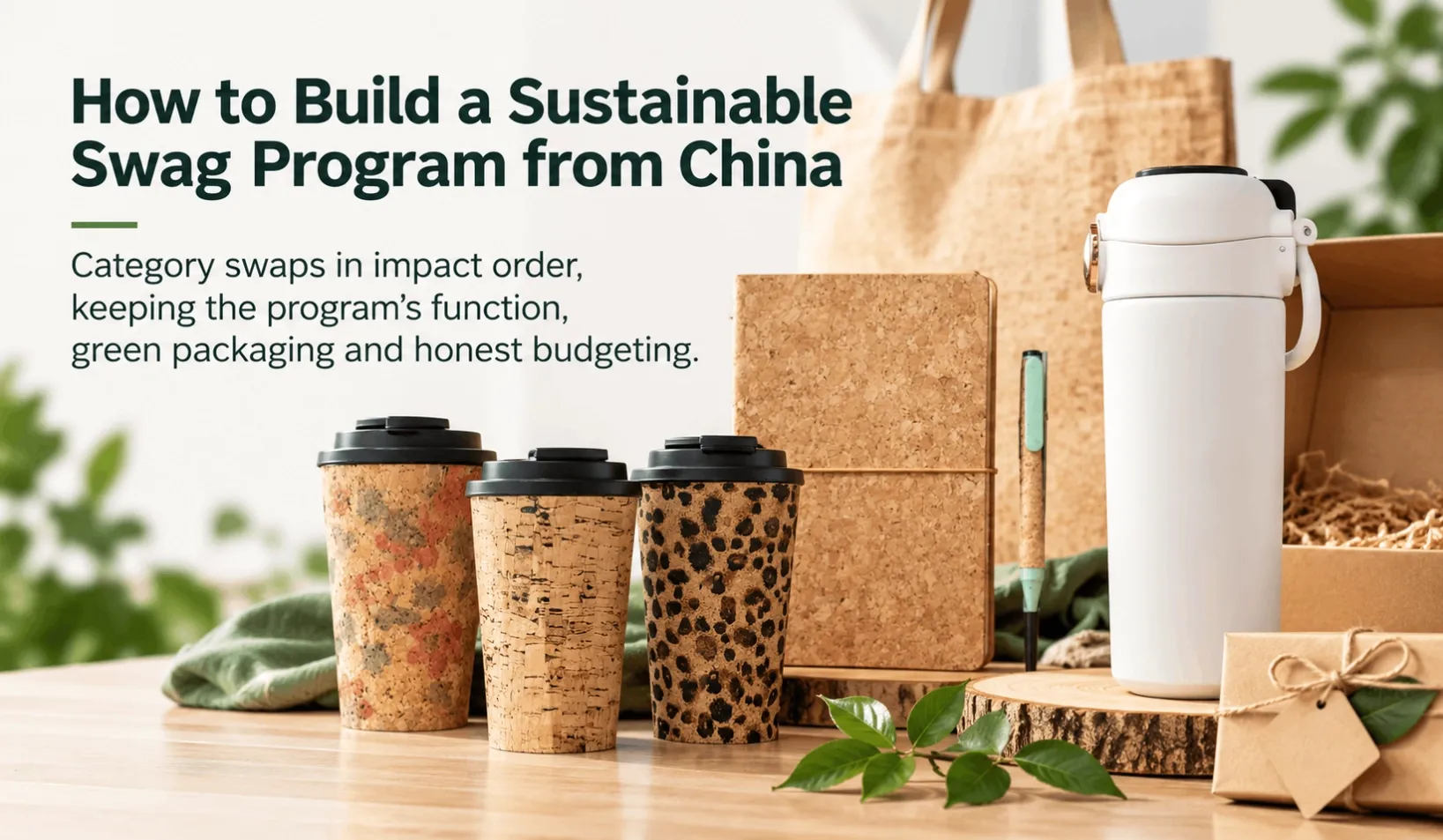
Eco-friendly swag is where a company's sustainability statement meets its marketing budget — and where the gap between the two becomes visible. Staff notice when the "sustainable" swag arrives wrapped in plastic, and clients notice when an eco-branded item breaks in a month. Building a swag program that survives that scrutiny is what this guide is about.
The sustainable swap starts with the items people use daily — recycled notebooks, reusable drinkware, recycled cotton bags.
The short answer: run sustainable swag as a transformation of your existing program rather than a parallel green catalog — swap the highest-impact categories first (drinkware to reusable, bags to recycled cotton, pens to wheat straw), move packaging to recycled or compostable, and treat durability as the primary ecological metric. Verify every material claim with a certification, and use one supplier so the material story stays consistent across the whole program.
This is the program-level companion to our corporate swag guide — that guide covers how a swag program works; this one covers how to make it sustainable without losing its function.
Why Should a Swag Program Go Sustainable?
Sustainable swag programs are driven by four pressures that rarely apply to other merchandise categories:
- The audience is already critical. Employees and clients apply more scrutiny to corporate sustainability than to almost any other claim — they see the packaging, they use the product, and they know what "greenwashing" looks like. Generic eco-branding is noticed and penalized.
- Procurement policy is tightening. Many companies now have vendor sustainability requirements and reporting expectations; swag spend sits inside those policies. A program that can document its materials is easier to keep approved than one that cannot.
- The brand risk cuts both ways. A credible sustainable program reinforces the company's positioning; a hollow one undermines the sustainability page on the website. The gap between web copy and physical reality is where trust is lost.
- The product economics work. Durability is the strongest ecological property and the strongest swag property — the items that survive years are the ones carrying the brand. The two goals point the same direction more often than people expect.
Our sustainable corporate gifts guide covers the property definitions (recycled content, renewability, durability, end-of-life, production standards) and the certification landscape; this guide applies them to the swag program's categories and operations.
Which Swag Categories Should You Switch First?
A full-program switch is rarely affordable in one step. The highest-impact swaps, in priority order — impact measured as material footprint per unit and visibility of the change:
Category | Sustainable Swap | Certification to Require | Why First |
|---|---|---|---|
Drinkware | Reusable stainless or rPET bottles and tumblers (replacing any single-use or disposable items) | Material declaration; GRS for recycled-content versions | Highest usage frequency per unit — every day of use compounds the impact |
Bags | Recycled cotton or GOTS organic cotton totes; recycled-fiber backpacks | GRS / GOTS | Highest volume category; the most visible instant swap |
Pens | Wheat-straw blend or recycled-plastic pens (with stated percentage) | Supplier documentation on the blend ratio | High volume, low unit cost — a cheap credibility win if the percentage is real |
Notebooks | FSC-certified paper, recycled covers | FSC (chain of custody) | Direct paper impact; easy for recipients to understand |
Packaging | Recycled or compostable mailers and boxes; no plastic wrap, no foam | FSC for paper goods; OK Compost for compostables | The most visible part of the program — and where greenwashing accusations usually start |
Apparel (if run) | Organic or recycled cotton, OEKO-TEX certified | GOTS / GRS / OEKO-TEX | High material footprint; worth switching where the program already runs apparel |
A practical sequencing rule: switch the categories that employees touch daily first (drinkware, bags), then packaging (the visible claim), then the long-tail items as the catalog renews. Each swap should be communicated as a specific fact — "recycled cotton, GRS-certified" — not as a general greening narrative.
How Do You Keep the Program Functioning While It Goes Green?
The failure mode of sustainable swag is sacrificing the program's actual job — brand reach and product usefulness — for the sustainability label. Four operating rules prevent it:
- Stick to the core catalog structure. Sustainable versions of the same five categories (drinkware, bags, notebooks, pens, tech accessories) keep the program's logic intact. A "green" program that replaces useful items with novelty eco-gadgets loses both functions. See our corporate swag guide for the base structure.
- Buy the version that lasts. Where a certified material option is less durable than its conventional equivalent (some recycled fabrics fade or pill faster), split the difference consciously: choose the material for the items where it performs, and keep the durable conventional option where the recycled one would fail early. Honest material choice beats wholesale labels.
- Test the materials as products. Recycled cotton bags and rPET drinkware are not automatically equal to conventional products. Approve samples and test them in use — the same sample discipline as any swag item, covered in our sample approval guide.
- Document and reuse the facts. Material percentages, certifications, and production standards belong in your program documentation — and then in internal communications and recipient-facing notes. The facts are the program's proof; keeping them central means every item explains its own claim.
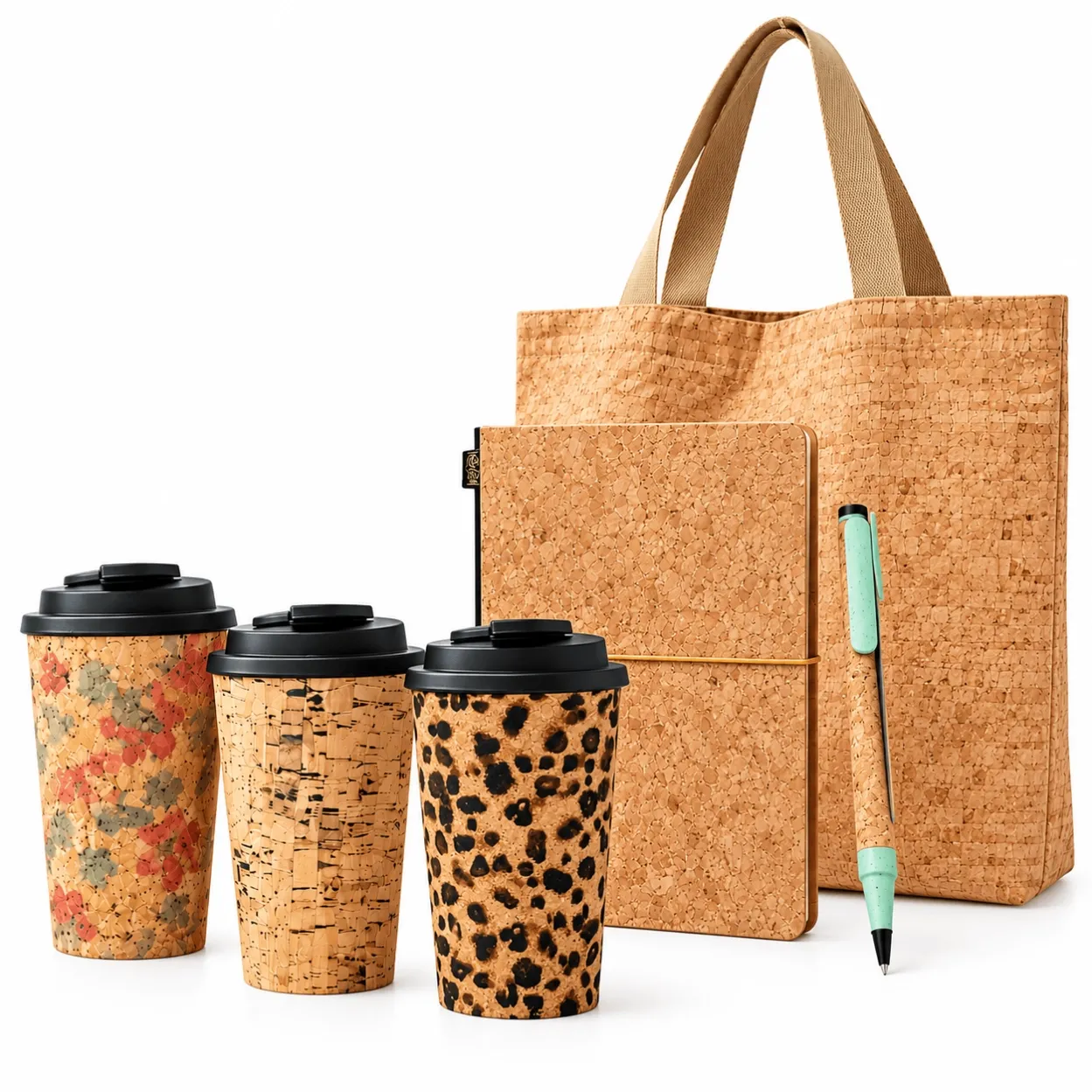
The same catalog, upgraded material by material: recycled cotton, FSC paper, certified content — with the facts stated per item.
How Do You Handle Packaging and Distribution Sustainably?
Packaging is where sustainable swag programs win or lose credibility, because it is the first physical artifact recipients touch:
- Eliminate plastic wrap and foam. This single swap removes the most common contradiction in corporate gifting — the green item in a plastic shell. Paper-based protection (molded pulp, corrugated inserts) covers most products.
- Use recyclable mono-material packaging where possible. A paper mailer with paper tape and no lamination is recyclable in most systems; a laminated multi-material box often is not, regardless of its label.
- Replace poly bags in bulk shipments. For bulk freight, ask for recycled-content or compostable poly alternatives, or box-based packing that avoids poly entirely.
- Account for freight in the claim. Sea freight has a fraction of air freight's emissions. Where the timeline allows, shipping by sea rather than air makes the program's carbon story materially better — and it is one of the easiest claims to state honestly (see our lead time guide for planning with sea freight).
- Design distribution to avoid waste. Bulk office hand-over with reusable distribution (a shared bin, a distribution card) beats individually bagged items; for remote teams, recycled-content mailers replace poly mailers. The distribution model also determines the packaging spec, as covered in our packaging guide.
How Should You Budget the Sustainable Swag Program?
The budget math differs from a conventional program in three ways worth planning for:
- The material premium is a line item, not a surprise. Certified materials and chain-of-custody administration add cost. Budget a defined premium percentage for switched categories and document it — an explained premium is defensible; an unexplained one gets cut.
- Durability reduces the replacement rate. A quality reusable item stays in inventory longer and is reordered less often. Some programs deliberately shift budget from quantity to quality — fewer, better items with higher per-unit cost and lower annual volume.
- Packaging savings can offset premiums. Removing plastic wrap, foam, and double-boxing saves real money; redirect those savings into the material premium rather than treating them as savings.
For the quote, brief the supplier with per-category material requirements, the certifications you will require and the volumes — the full brief structure is in our sustainable corporate gifts guide. You can also browse our product categories to shortlist the sustainable versions of each item.
Frequently Asked Questions
What is eco-friendly swag?
Eco-friendly swag is branded merchandise made with verifiable sustainable materials and processes — recycled or renewable materials with the right certification, durable construction meant to last years, responsible production at the factory, and packaging that doesn't contradict the claim. The distinction from "green-looking" swag is documentation: an eco-friendly program can name the material, the percentage and the certificate; a green-looking one says "eco-friendly" and stops there.
How do I build a sustainable swag program?
Transform the existing program rather than replacing it: keep the core catalog structure (drinkware, bags, notebooks, pens, tech), switch the highest-impact categories first to certified materials, move packaging to recycled or compostable options, and treat durability as the primary metric. Verify each material claim with a certification, test the new materials as products before volume orders, and brief one supplier across the whole program so the material story stays consistent.
Is eco-friendly swag more expensive?
The materials carry a modest premium — certified recycled and organic options cost more than conventional equivalents, and chain-of-custody certification adds administration cost. But two factors offset it: packaging changes (removing plastic wrap and foam) free up real budget, and durable items are reordered less often. Programs that budget a defined premium percentage and document it keep the sustainability line approved more easily than programs that treat the premium as a surprise.
What sustainable swag items are most popular?
The categories employees already use every day, in sustainable versions: reusable drinkware (stainless or rPET), recycled or GOTS organic cotton bags, FSC-certified notebooks, wheat-straw blend pens, and recycled-content packaging. The pattern behind the popularity is the same one that drives all swag: utility first. Sustainable versions of useful items outperform novelty eco-gadgets consistently, because recipients judge the product before the label.
How do we avoid greenwashing in our swag?
State facts instead of claims: name the material ("GRS-certified recycled cotton"), the percentage where it applies ("40% recycled content"), and the production standard ("ISO 14001 facility"). Avoid umbrella language, verify supplier certificates by number, and make sure packaging and freight support the same story the products tell. Our sustainable corporate gifts guide covers the full claim-verification framework, including the patterns greenwashing usually follows.
Next Step
A sustainable swag program comes down to four decisions: switch categories in impact order (drinkware, bags, pens, packaging first), keep the core catalog structure and swap materials within it, verify every claim with a certification, and budget a defined premium while capturing the packaging savings.
If you are greening an existing swag program, send us your current catalog and volumes — we will propose certified material alternatives per item, document each claim, and quote the program with the premium stated up front. You can also browse our product categories and read the rest of the series: sustainable corporate gifts and eco-friendly promotional products.