
Gift Ideas
Employee Wellness Gifts: What Actually Gets Used in Corporate Programs
How to build an employee wellness gift program that gets used: what counts as a wellness gift, tiered structures for a diverse workforce, kits versus single items, realistic budgeting, what to avoid,
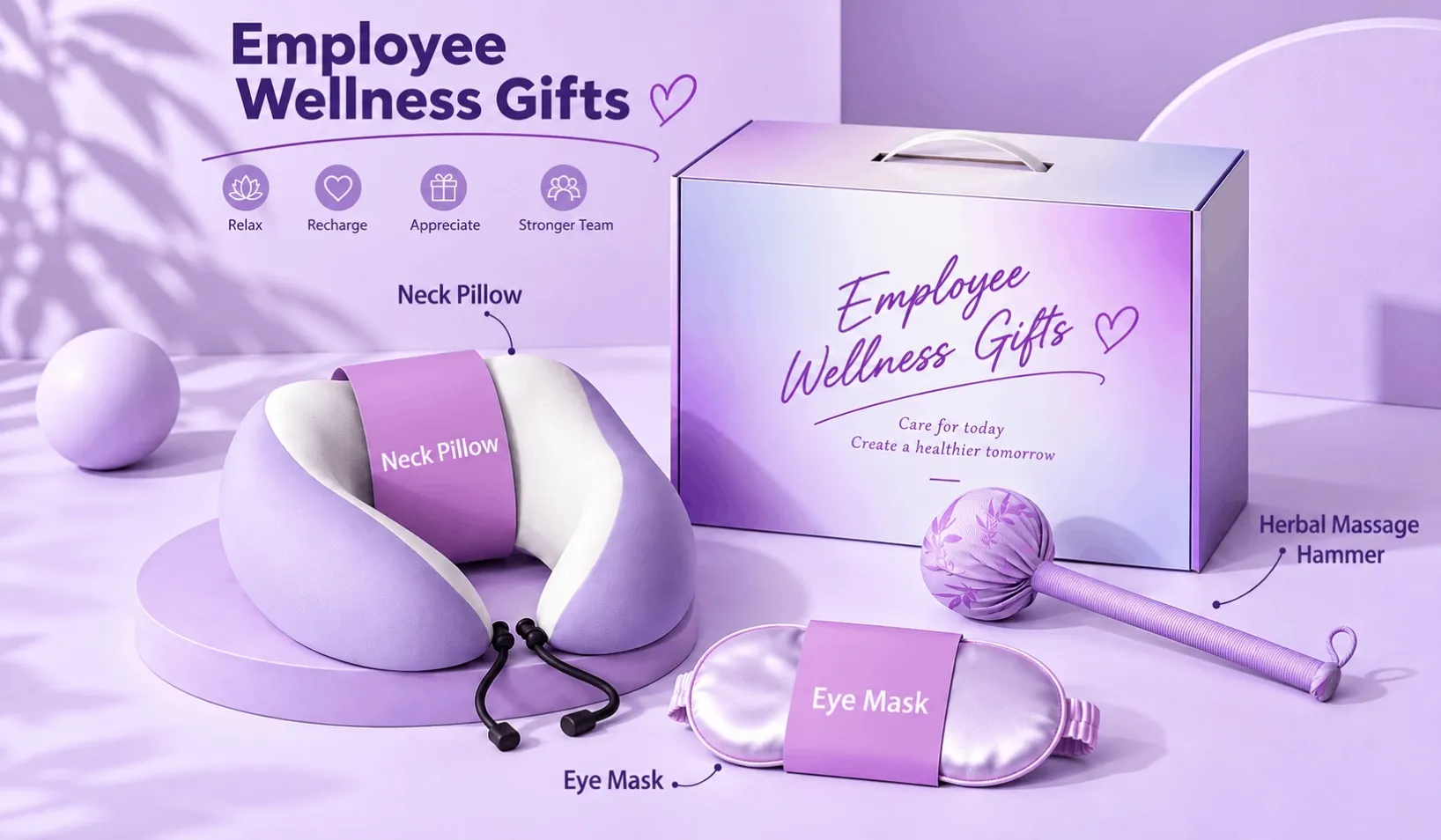
Employee Wellness Gifts: What Actually Gets Used
Wellness gifting has a credibility problem. Most "wellness" gift programs are a branded water bottle and a stress ball, handed out during a wellness week nobody remembers, and they do nothing for the one metric the program was supposed to move. The employees who needed the support are the least likely to take a cheap branded gadget home.
This guide is written for the buyer — HR, people ops, or a procurement team — who has to specify a wellness gift program and defend the spend. It covers what actually gets used, how to structure a program across a workforce that does not share one set of needs, what a realistic budget looks like, and how to source it from China without ending up with a container of unsold stress balls.
What Counts as an Employee Wellness Gift
An employee wellness gift is a physical item a company gives to support an employee's physical, mental or financial wellbeing — as distinct from recognition gifts (which reward performance) and client gifts (which build a commercial relationship). Health and wellness gifts for employees fall into five practical groups, and each has a different use rate and cost profile:
Category | What It Includes | Use Rate | Typical Use |
|---|---|---|---|
Physical wellbeing | Drinkware, fitness accessories, massage tools, ergonomic desk items | High — used daily if specified well | Broad workforce programs |
Mental wellbeing | Scented items, sleep aids, mindfulness tools, comfort items | Medium — depends heavily on quality | Appreciation moments, stress peaks |
Desk and workspace | Ergonomic accessories, posture supports, desk exercise items | High in office environments | Onboarding, office-based teams |
Consumables | Healthy snacks, tea, supplements, wellness boxes | High but short-lived | Wellness week, recurring touchpoints |
Experiences | Gym credits, wellness app subscriptions, vouchers | High but not a physical item | Flexible-workforce programs |
The distinction that matters most in practice: consumables and experiences get used but leave no lasting object, while physical items either become part of daily life or go straight into a drawer. There is very little middle ground. That is why specification quality decides the outcome more than item category does.
Why Most Wellness Gift Programs Underdeliver
Four failure patterns account for most of the waste:
- One item for a workforce that does not share one need. A 25-year-old in a warehouse and a 50-year-old at a desk need different things. A single-item program serves the middle of the distribution and nobody at the edges.
- Wellness as a logo exercise. When the item is chosen because it is cheap and printable rather than because it is useful, employees read it exactly that way — as a marketing cost, not a benefit.
- No quality floor. A water bottle that leaks or a massage tool that breaks does more damage than no gift, because it signals that the company did not think the employee was worth a good one.
- No repeat mechanism. A one-off drop during wellness week is a campaign. A program has a rhythm — onboarding, milestones, seasonal moments — and a reorder path that keeps it running.
The fix for each is a procurement decision, not a creative one: segment the workforce, set a quality floor, standardize a small catalog, and plan the annual rhythm before choosing a single item. For the broader program logic that sits behind this — how employee gifting differs from client gifting, and how to buy at volume without over-ordering — see our bulk employee gifts guide.
Corporate Wellness Gifts by Recipient Group
The most effective structure is a small tiered program rather than one item distributed evenly. Corporate wellness gift ideas that try to serve everyone with a single SKU end up serving nobody particularly well. Three tiers cover most workforces:
Tier | Who | Item Direction | Budget Signal |
|---|---|---|---|
Tier 1 — Universal | Everyone on payroll | Insulated drinkware, quality desk item, healthy snack box | Lowest per head; volume economics matter |
Tier 2 — Segmented | Chosen from a short menu by the employee | Pick-one from three options (fitness / desk / comfort) | Mid-range; the choice itself is part of the value |
Tier 3 — Targeted | Specific needs — new parents, teams after a crunch, return-to-work | Premium single item or curated kit | Highest per head, smallest volume |
The pick-one model in Tier 2 is worth highlighting because it solves the "one item for a diverse workforce" problem at almost no extra cost — three SKUs at similar pricing, distributed against individual choice. Warehouse and office staff can select what fits their day, and the program stops trying to find a single object that suits everyone.
Wellness Gift Ideas for Employees: What to Specify
What follows is the practical specification for each commonly requested category — what to buy, and what to check before you do.
Insulated drinkware
The default wellness item, and the one most often specified badly. A tumbler or bottle earns daily use only if it fits the recipient's actual routine: a 20oz tumbler for the commute and desk, a larger bottle for the gym, a compact one for the clinic or warehouse floor. Specify 304 stainless steel with a double-wall vacuum construction — 201-grade bases crack under impact and repeated washing — and confirm the lid gasket seals when the tumbler is tipped.
Desk and ergonomic items
Laptop stands, wrist supports, footrests and monitor risers all have a high use rate in office environments because they solve a problem the employee already notices. They are also heavier and bulkier than drinkware, which changes freight economics — plan these for a domestic-first program or for offices where consolidated shipping works.
Massage and recovery tools
Mini massage guns, foam rollers and hand-held massagers sit at the premium end of the wellness range and carry real perceived value. Check battery certification for anything with a lithium cell (UN38.3 for transport), and test the motor under load before approving a sample — a weak motor is obvious within seconds of use.
Comfort and mental wellbeing items
Scented candles, weighted eye masks, sleep kits and comfort textiles. This is the category where cheap specification is most visible: a thin blanket or a candle with no throw reads as filler immediately. If the budget cannot support a genuinely good version, either move the money to another category or specify a smaller version of a better item. Wellness items for employees in this group are chosen for how they feel in use, not for how they photograph.
Healthy consumables and wellness boxes
Snack boxes, tea selections and curated wellness kits have high satisfaction and short shelf life — they get used, then they are gone. Two practical constraints: check food-import regulations for the destination country before committing, and confirm shelf life against distribution timing. A wellness box that arrives with three weeks left on the date code is worse than no box.
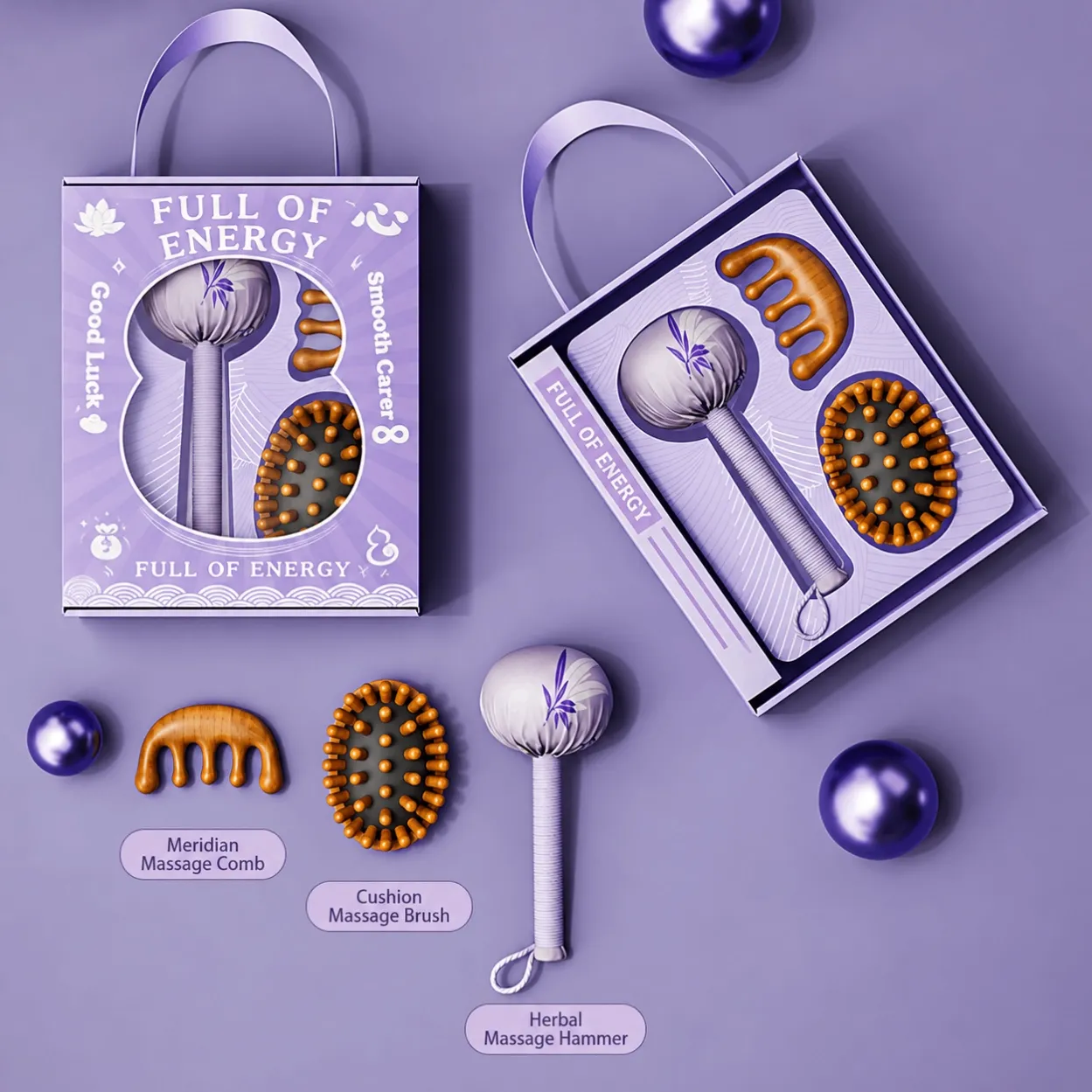
Wellness Kits and Gift Baskets
A wellness kit is a curated set of items presented as one gift. Wellness gift basket ideas for employees outperform single items in perceived value because the presentation and the range of contents do more emotional work than the same money spent on one object — but they are harder to execute and easier to get wrong. If kits are new to your program, our custom gift packaging guide covers box specification, assembly options and the freight cost of presentation.
Wellness kits for employees also carry a practical advantage over single-item programs: they let one budget line cover several categories at once, so a recipient who does not use one item still uses another.
Kit Structure | What's Inside | Best For | Watch Out For |
|---|---|---|---|
Desk reset kit | Desk item, notebook, drinkware, herbal tea | Onboarding, office teams | Kit weight drives freight cost |
Recovery kit | Massage tool, muscle balm, sleep mask, electrolyte tablets | Post-crunch, physical roles | Consumable shelf life and import rules |
Comfort kit | Blanket, candle, tea, warm socks | Winter gifting, seasonal moments | Cheap textiles are visible instantly |
Movement kit | Resistance bands, gym towel, bottle, shaker | Fitness-oriented populations | Sizing and latex allergies |
Two operational points decide whether kits work. First, assembly location: assembling kits in China is cheaper per unit but commits you to full-quantity production up front; assembling at the destination allows late changes but costs more per kit. Second, box specification: a rigid printed box transforms perceived value, but it also adds cost, weight and volume — and if the box arrives crushed, the whole kit reads as cheap.
Healthy Corporate Gifts: What to Avoid
Some categories persist in wellness programs despite consistently poor outcomes:
- Anything with a health claim you cannot document. Supplements, herbal remedies and "detox" products create regulatory exposure across most Western markets. If a product implies a health benefit, the compliance burden usually outweighs the gift value.
- Single-use plastics. A cheap plastic item contradicts the wellbeing message the program is trying to send — and many companies now have procurement policies against them outright.
- Items that require a lifestyle the employee does not have. A yoga mat for someone who does not do yoga is a storage problem, not a benefit.
- Anything that could be read as medical advice. The line between a comfort item and a health intervention matters for liability, especially in regulated industries.
- Personal-care products with fragrance or ingredient sensitivities. Scented items are popular but exclude a meaningful share of recipients; always offer an unscented alternative if the program includes them.
Wellness Prizes and Incentive Items
Wellness prizes for employees sit in a different category from wellness gifts: they are awarded for participation rather than distributed to everyone, which changes both the item and the quantity. Common structures include step-challenge rewards, wellness fair giveaways drawn as prizes, and completion incentives for health screenings.
For prizes, the calculus inverts. Because the recipient pool is small, unit cost matters less than memorability — a genuinely good item at 50 pieces beats a mediocre one at 500. Popular prize tiers are drinkware, fitness accessories, massage tools and wellness kits. Health wellness promotional items used as fair giveaways follow the opposite rule: where volume is high and item cost low, the reliable picks are healthy snacks, small drinkware and reusable items that reinforce the program's message rather than contradicting it.
Budgeting a Wellness Gift Program
Budget Line | Basis | Notes |
|---|---|---|
Universal allowance | Headcount × per-head budget | The volume line — every dollar here is multiplied by the workforce |
Segmented menu | Headcount × mid-range allowance | Three SKUs at similar cost per unit; choice is the value |
Targeted moments | Estimated events × per-event budget | Small quantities, higher per-unit spend |
Wellness week | Event allocation | Often consumables and lower-value items at high volume |
Kits and premium | Selected headcount × kit cost | Assembled and boxed; freight is a material line |
Three levers move the total more than item selection does. Volume tiers — the same tumbler at 500 versus 2,000 pieces differs substantially per unit. Specification consolidation — one drinkware SKU across the whole program keeps every order in a better price tier and keeps quality consistent. Freight planning — bulky items like footrests and blankets ship expensively; consolidating an annual order into one shipment often saves more than negotiating the unit price.
Sourcing Wellness Gifts from China
The sourcing model that works for wellness gifting has four requirements, and the fourth is the one most buyers overlook.
- One partner for the core catalog. Wellness programs touch drinkware, textiles, desk items and consumables — four different manufacturing categories. A sourcing partner who holds your specifications across them keeps quality consistent and handles the reorder; splitting across suppliers produces drift and duplicated shipping cost.
- Test items as products, not as gifts. A wellness item is judged in daily use. Approve a physical sample with branding applied and use it before committing to volume: does the tumbler seal, does the massage tool have real power, does the blanket feel like something you would keep. Our pre-production sample guide covers the approval process.
- Check certification for anything ingestible or electrical. Food-contact compliance for drinkware, UN38.3 for battery products, and destination-specific food import rules for consumables. These determine whether the shipment clears customs.
- Plan the annual rhythm, not the single order. Wellness programs run continuously — onboarding, milestones, seasonal moments. Confirm reorder terms (lead time, minimums, setup reuse, price validity) when the item joins the catalog, so the program does not renegotiate every quarter.
Timing is the constraint that catches most programs: production runs 20–30 days after sample approval, plus freight. A program built around a January wellness week needs to be specified and sampled by October.
Frequently Asked Questions
What are the best wellness gifts for employees?
The items that earn daily use rather than occasional use: insulated drinkware, ergonomic desk accessories, and recovery tools where the budget allows. Usefulness beats novelty every time — an item used daily carries the company message further than an eye-catching item used once. The strongest program structure is a small universal item plus a pick-one menu, which serves a diverse workforce without multiplying SKUs.
How much should we budget per employee for wellness gifts?
The structure matters more than the number. Most programs run on a per-head annual allowance covering one or two quality items, plus separate allocations for wellness week, targeted moments and prizes. The levers that make a fixed budget work are volume tier pricing, one consolidated core catalog, and annual freight consolidation rather than quarterly orders.
What is the difference between wellness gifts and recognition gifts?
Wellness gifts are given to support wellbeing and are distributed broadly — often to everyone. Recognition gifts reward specific performance or tenure and go to individuals. The distinction matters because it changes the item: a wellness item should be universally useful and non-competitive, while a recognition gift should feel earned and personal. Many companies run both programs side by side with separate budgets and separate catalogs.
Are wellness gifts tax-deductible or taxable to employees?
Treatment varies by jurisdiction and by item value. In the US, de minimis thresholds determine whether a gift is taxable income; the UK and EU have their own thresholds and rules. Because these thresholds change and vary by country, confirm the current position with your finance or tax team rather than relying on a general rule — and be aware that cash-equivalent items and vouchers are usually treated differently from physical goods.
Should wellness gifts be branded with the company logo?
Lightly. A small, well-placed mark reads as thoughtfulness; a large stamped logo reads as advertising and reduces the chance the item gets used outside the office. For wellness specifically, an item that looks like company merchandise undermines the message — the gift is about the employee's wellbeing, not about brand visibility.
How far in advance should we order wellness gifts?
Work backwards from the distribution date: production takes 20–30 days after sample approval, sampling takes 5–12 days, and sea freight adds several weeks depending on destination. A comfortable lead time for a seasonal program is 3–4 months from specification to delivery. Programs tied to a fixed date — a wellness week, an annual event — should lock the specification at least four months out.
Can we offer employees a choice of wellness gift?
Yes, and it is one of the highest-value structural decisions available. A pick-one menu of three items at similar cost per unit serves a diverse workforce without multiplying production complexity, and the act of choosing measurably increases how the gift is received. The operational requirement is that all three options share a similar unit cost and lead time, so the program stays predictable.
Next Step
A wellness gift program comes down to four decisions: segment the workforce before choosing items, set a quality floor and specify against it, build a small catalog with a pick-one tier, and plan the annual rhythm with reorder terms attached.
If you are specifying or consolidating a wellness program, send us the headcount, the segment structure and the budget per head — we will confirm what is feasible per category, quote at your volume, and give you a sampling and production timeline you can plan around. You can also browse our product categories or read the corporate gift sourcing service page for how the program runs end to end.
More Models and Options
The items described on this page cover the categories most programs need, but our range runs considerably wider than what is published here. If you need a specific wellness item, a different format, or a kit assembled to your own specification, ask us for the full catalogue — we will send the complete product list with materials, capacities, packaging options and pricing bands so you can select against your program requirements.